-

Meet Sepia, An Unsung Pigment for Painting
•
Sepia isn’t a colour that has a lot of star power. No wonder! It was named after the sepia cuttlefish, which is where sepia gets its pigment. These small cephalopods, related to their much larger cousins, the octopus and the squid, store ink in sacs situated between their gills. When under attack, they release…
-

Painting the Blues
•
Next time you run out of ultramarine blue, remind yourself that there was a time when the ultramarine blue pigment was so expensive, no one could afford to buy too much of it! Johannes Vermeer, for instance, used so much ultramarine to paint Girl with a Pear Earring that he put his family into…
-
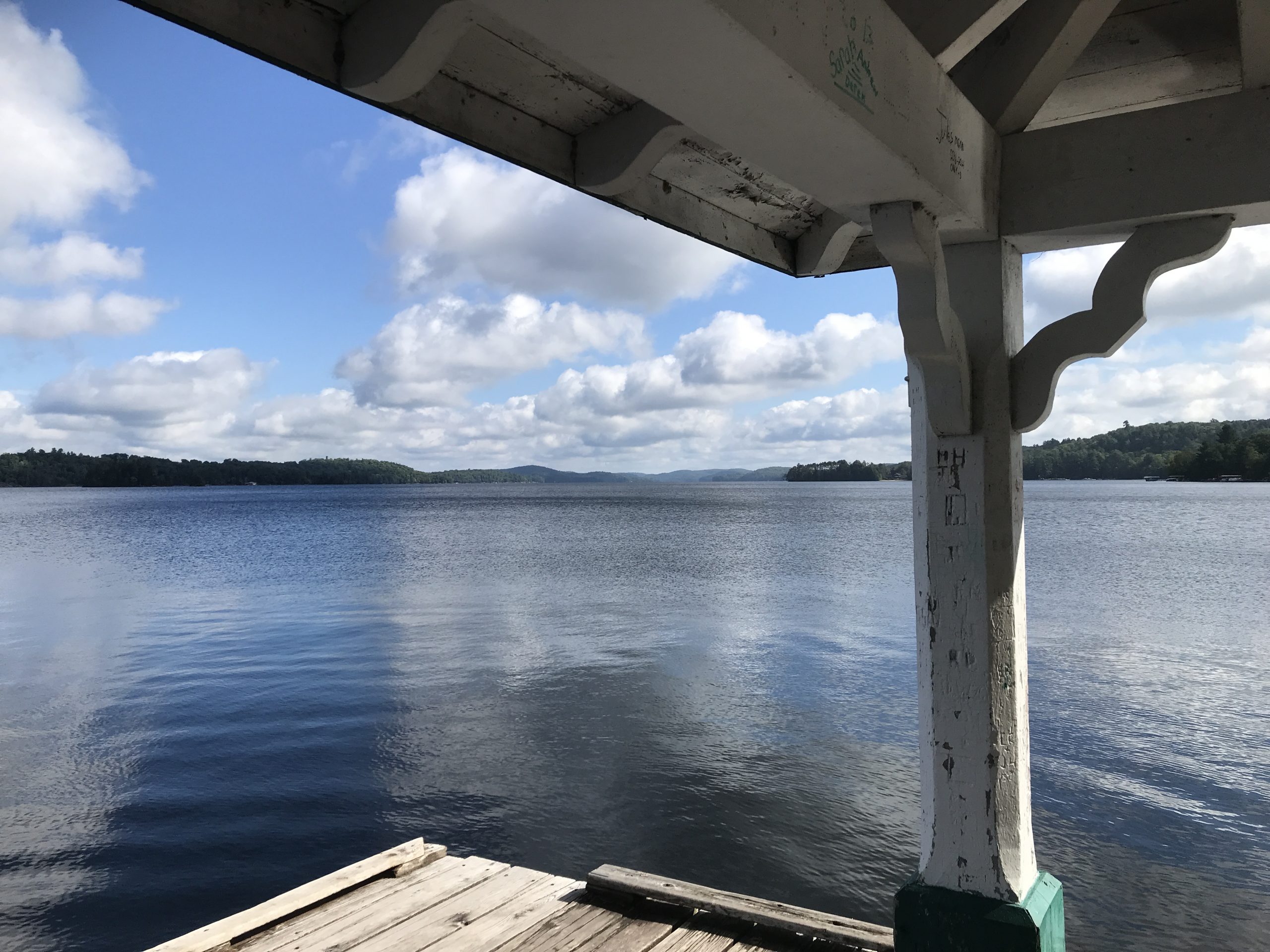
September Blues
•
It is so quiet along the road here that you can hear a pin drop—or an acorn or two, to be precise. While the city is filling up with activity once again, cottage country has slipped into a great silence. Quiet is one of my favourite qualities (and rare), but the week following Labour…
-

-

-

Who was the masked shopper?
•
Okay, I know I shouldn’t take mask wearing lightly, but the other day I was in a bank where every one of us was wearing a mask. Honestly, how strange can our world get? (Don’t ask, we might find out.) To be honest, I was a reluctant mask convert. I held out until the…
-

What’s the worst that could happen?
•
Take yourself back a year when someone cut you off in traffic, causing you to miss a turn and making it certain you’d be late for your VERY IMPORTANT meeting. In a not-so-genial state, you tried to find some Zen by asked the age-old question, “Now, really, what’s the worst that could happen? Consider…
-

Flattening the technology curve
•
There’s lots of predictions “zooming” around these day as to how the world is going to look post COVID-19. Many, for instance, are celebrating the fact that thousands have now broken the technology barrier and embraced all manner of digital connecting, including the ubiquitous ZOOM call. (Some of us even wonder if too many…
-

-

Sing out to RPSM
•
Regent Park School of Music performs at Harbourfront. A school that for over a decade has had a mission to bring music education and experience to kids in Toronto by removing financial barriers.
-

Ode to a boathouse
•
Boathouses aren’t meant to last on Ontario lakes but our grand old dame of a boathouse on Lake of Bays served us well, until this spring.
-

Social mis steps & words at play
•
Beth Parker writes on the how we live in a “word landmine” where some errors and mis steps are accepted and others make headlines.
-

How to care for your phone and other New Year’s resolutions
•
I resolved for 2019 not to make resolutions. Instead of adding new “shoulds”, I decided to accept my foibles and live my life without additional rules. Then on January 2, I put my mobile phone through the wash. Albeit, it was on the delicate cycle, but a tip to cell phone users: if a…
-

Pay attention to your knitting
•
No, I haven’t got the quotation wrong. Like many sayings, the phrase “Stick to your knitting” has actually morphed from its original intent, “Attend to your knitting.” The idea isn’t to do the thing you are good at (stick), but to pay full attention to the task at hand (avoid errors). It all fits…
-

Name this person
•
Remember when the big reveal following the birth of a baby was the question, “Boy or girl?” The answer’s not the mystery it used to be. Most parents today know what they are having ahead of the birth. In fact, “reveal” parties where a mystery piñata spills out pink or blue confetti are one…
-
Plein air Nova Scotia style
•
It was a rare opportunity: a good friend donated her lovely farmhouse in Nova Scotia to selected artists so they could paint. I was asked to join the group—4 retired art teachers and me. I was astonished, delighted and a bit paranoid. What if I had slipped in by mistake, or even worse, they…
-

Hello, pioneer Beth
•
For 10 months of the year, I’m “urban Beth”. I hang out on Queen Street East, enjoy downtown shows and theatre, and when bored with Toronto, visit New York for additional chaos and grittiness. My clothes tend to the black and grey, and if I feel like dressing down, I leave off the nail…
-

Mary Poppins revisited: Life on the ceiling
•
In a fit of nostalgia, I re-watched Mary Poppins the other evening. As a child, I loved the story (both the book and the movie) but as a grownup, of course, there’s so much I missed. The Disney movie is a work of art that combines live-action and animation. Shot entirely in California, meticulously…
-

Walking in the Easter Parade
•
I grew up with Easter being a “big deal”. At least half the day involved being inside a church with serious music, white lilies, and rather complex messages (scary for a kid) about life and death. I’ll always have a soft spot for the Easter season, but referring to the day and “celebratory” and…
-

Near wins and finger puppets
•
After two weeks in an Olympic-induced comma, I couldn’t stop thinking about those who almost made it— the bobsled team that fell behind by two hundreds of a point, those skaters who missed gold with barely a point to spare, the hockey players who lost because of a shoot-out (ouch). In short, I became…
-

Is there a genius in the house?
•
It’s one of my worst nightmares. My computer screen is black and it stays that way no matter what I press. So I do what most people do — I start clicking keys with wild abandon in hopes I can bring it back to life. The computer fights back. In self defence, it begins…
-

A jar of moral obligations
•
At the beginning of December, store shelves were brimming with Advent calendars filled with chocolates. Not for me. I was presented with an “Advent Jar” filled with handwritten messages. Always grateful for a pleasant surprise, the little notes intrigued me. Did they actually represent gifts? Perhaps coupons for nice things? Inspirational quotes? Hey, maybe…
-

Don’t sell me something. Just give me an argument.
•
It was one of my most bizarre shopping moments. I’d just met with a client to confirm we’d be moving ahead with a project. Feeling rather celebratory, I stopped by an LCBO to pick up a favourite bottle of wine. “I’m going to really splurge this time,” I told myself. So often I avoid…
-

Northern Lights Unplugged
•
Okay, folks, loosen up. Today’s challenge is a biggie. We’re going to pick a stunning place to visit, take in a breathtaking, awe-inspiring, once-in-a-life time mind-altering sight. And we’re going to do it without taking a photograph. In fact, you have to leave your cell phones behind and depend on your memory to remember…
-

A rodent ate my garnish
•
The waiter explained that the restaurant had a rodent problem. I’m still speculating on what happened when he returned to the kitchen to explain to his boss why he chose those particular words. It’s all part of the charm when you leave the restaurants of Toronto– or should I say, the cafes, bistros, cantinas,…
-

All I need
•
When you pack for your vacation, what is “all you need?” Assume that the basics of life are covered (i.e. food, shelter). These are the “extras” you need to make your vacation complete. Don’t hesitate and don’t be logical. What’s on that list? What is ALL that you need? My father used to pack…
-

Even if it can’t be done, do it anyway
•
Anyone who’s been around little kids has a special place in their heart for the word “more!” How many of you have sang “The Wheels on the Bus” so many times that you thought your own wheels would come off? In our house, it was a video based on the book Mike Mulligan and…
-

One Ringy-Dingy, Two Ringy-Dingies
•
There isn’t a company out there that doesn’t claim “customer service” as the one unique characteristic that sets them apart. Yet as consumers, we continue to experience customer service nightmares, which at best, are as “sit-com” worthy. For example, my latest conversation with the “telephone lady” (oh, I sense an immediate connection here): I’d…
-

Whatever floats your boat (or house)
•
It was the kind of conversation only a mother could have with her son in a car on the way back from the airport. “How is everything?” “Fine.” How is work? “Good.” “How’s the cat?” “OK.” “How’s the house?” “Floating.” “Floating?” “Oh, I didn’t tell you, we moved.” “Moved where?” “Oh it is a…
-

Dr. Seuss, my writing coach
•
I’ve learned quite a bit from Dr. Seuss over the years. He’s been a career counselor (Oh, the Places You’ll Go!), a guide to hiring babysitters (The Cat in the Hat), and an advisor when kids get fussy (Green Eggs and Ham). He’s even assured me that I’m not a megalomaniac for the many…
-

Oh brother (and sister), where art thou?
•
While writing a blog on productivity, I came across an alarming statistic—apparently more time is lost searching for, and trying out new productivity apps than is actually saved by using these apps. I’m not that surprised given the latest obsession with “have I got an app for you”. I mean: did you know that…
-

Beth Parker meet Beth Parker
•
It started with misdirected email. For a few exhilarating seconds, I believed that US authors and publishers were tracking me down. Then I realized that the emails were for a book publicist who almost had the same email address as me. So for over a year now, I occasionally need to re-direct a message…
-

Just point me in the right direction
•
My mission was to “repoint my DNS settings”. I had an immediate vision in my head of my mother, apron tied about her waist. With all the marvellous skills she taught me over the years, somehow she missed this one. My father would have suspected it had something to do with bricks. It all started by…
-

What’s my password?
•
Technology has made my life (mostly) easier—thank you, IT gods, for that. But there are details that need to be worked out. Take passwords, for example. I’ve now filled three notebooks with secret codes and I sense I’m not alone in this. A thousand years from now, the early 21st century will be one…
-

Tea tales
•
Thank goodness for Downton Abbey. The art of drinking tea had been reduced to warm water in a Styrofoam cup or some concoction of berries with candy, soaked in hot water, and sold for $5 as “birthday cake blend”. But at Downton, the world learned the real deal about tea. We watched Duchess Grantham and Violet…
-

On Painting Tulips
•
This month I participated in my second art show, which means not only do I submit a new piece of art but also a new “artist statement.” I’m posting my statement this month. It pretty much sums up my current mindset on how to enjoy life as we go along instead of trying to…
-
January Goals: Lost in Space
•
During those first bright, new days of January, I love writing down goals for the coming year —not necessary doing them—but definitely writing them down. The very act represents so much potential. The sky’s the limit when it’s all recorded in a brand new notebook, especially when I add those little check-off boxes. So…
-
Merry Christmas, Clark
•
Every year at this time, there it is—the prerequisite article about the commercialization of Christmas and why we should all feel guilty about too much—too much receiving, too much giving, too much indulging, too much shopping, too much eating, too much of everything. Knock it off. Time to channel your inner Clark Griswold, his…
-

Help I’m trapped in my shapewear and can’t get out
•
As I write this, there’s a woman out there struggling to free herself from a shapewear attack. Her adventure started out innocently—a relaxed weekend shopping trip, taking time to check out the fancy lingerie, and then fashion’s latest addiction—shapewear. “I’ve got the time,” she rationalizes, “I don’t recognize anyone entering the change room—why not…
-

Beth’s Big Art Show Debut
•
As long as I can remember, I wanted to go to art school. The option was strictly forbidden for me, strange when I consider that my mother, an excellent oil painter, took lessons from Group of Seven artist, Arthur Lismer. But the concern, I believe, was connected to the fear that many first generation…
-

Taking a risk at the public library
•
I rarely visit a library in the city. With all the technology we can endure at home, plus books I’m certain procreate when we’re not looking, there’s hardly the need. When I do drop in, in spite of the “new” look of today’s libraries, these are still subdued, conservative places. Upon entering, you can’t…
-

Waking up to smell the coffee
•
The silence is what I listen for, if that makes any sense. Driving north, it’s not until the rock cuts north of Gravenhurst that I even believe this is possible, given the chaos and noise I’ve left behind in Toronto. It’s not just the traffic and the construction. My ears are still ringing from the…
-

There’s a raccoon in my attic and she’s got Bette Bandit Eyes
•
It’s an urban horror story. In the middle of the night it starts, incessant chewing above your head. Then you realize it’s probably on your roof and something is trying to get it. At first, you can only hope it’s a wild critter. Maybe the fact that your house is being consumed particleboard by particleboard…
-

My New York love affair: with the city not a person
•
So someone hands me a bag of money and tell me I have to spend it all on traveling. It’s enough for an extra long weekend, not a summer vacation. I don’t hesitate. I book a trip to New York City. “But haven’t you been there many times before?” my Canadian friends ask, as if…
-

Private time with J.M.W. Turner
•
I recently visited the Metropolitan Museum of Art with one objective in mind—19th century European (including British) painters. I even narrowed my focus down to J.M.W. Turner. Having just seen the movie, Mr. Turner, it gave me the perfect excuse to make a pilgrimage to see 3 paintings displayed there. I made my way…
-

Parker’s Toronto: Drawing Henry Moore, Beth Parker No. 9
•
I was eleven years old when my parents loaded me, my grandmother and aunt into our ‘65 Buick and drove downtown from Toronto’s west end to see “that sculpture.” Henry Moore’s The Archer had just been installed in front of the new Toronto City Hall. It was 1966. Within a day of the ceremony, one…
-

The Well-Travelled True North Feline
•
Our son headed back to Toronto from Yellowknife early in January, this time with a cat handily packed in a pet carrying bag that looked like he was travelling with a duffle bag which moved. Weather delays in the North West Territories (surprise surprise) meant he missed his flight from Calgary to Toronto. He was offered standby but in Thomas’…
-
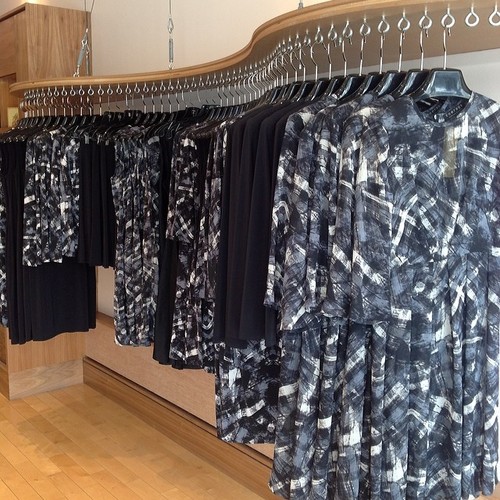
Parker’s Toronto, Hot fashion and hot tamales, Beth Parker no. 8
•
An impromptu search for the perfect dress to wear to my book launch turned out to be an advertisement for Toronto as the best “livable” cities. Like a well-seasoned New Yorker, we found our treasures in out-of-the-way corners not likely found on a tourist map. Ryerson Public School First stop to pick up my…
-

Bat Boy of the Lake
•
I was not prepared to share a bedroom with him. He clung there on the window while I squeezed myself onto a downstairs couch. My two cats were delighted. I woke up with muscle aches where I didn’t know I had muscles. The day before, I’d arrived at our cottage on a lovely sunny…